Home /News /Fiber Optic Patch Cord /Fiber Optics /20 Questions on Basic Knowledge of Fiber Optic Cables /
20 Questions on Basic Knowledge of Fiber Optic Cables
author: Lawson
2025-11-20
Part 1: Fundamentals of Optical Fiber and Cable
1.What is the structure of optical fiber?
Fiber optic is a cylindrical waveguide composed of transparent media, which is divided into three layers from the inside out:
Fiber core: located at the center and made of high-purity silicon dioxide, it is the channel for light wave transmission.
Cladding: Surrounding the core, with a refractive index slightly lower than the core. By utilizing the principle of total reflection, light is confined within the fiber core and propagated forward.
Coating layer: The outermost plastic protective layer used to protect fragile optical fibers from physical damage such as microbending and moisture.
Fiber optic is a cylindrical waveguide composed of transparent media, which is divided into three layers from the inside out:
Fiber core: located at the center and made of high-purity silicon dioxide, it is the channel for light wave transmission.
Cladding: Surrounding the core, with a refractive index slightly lower than the core. By utilizing the principle of total reflection, light is confined within the fiber core and propagated forward.
Coating layer: The outermost plastic protective layer used to protect fragile optical fibers from physical damage such as microbending and moisture.
2. Composition of optical cable
Fiber optic cables are cables made to protect and use optical fibers in practical engineering, and their structure is more complex:
Cable core: It contains one or more optical fibers and is the core of an optical cable.
Reinforcement: usually composed of aramid yarn or steel wire, providing tensile strength for optical cables.
Sheath: The outermost plastic shell provides mechanical protection, moisture resistance, chemical corrosion resistance, and other functions.
Some optical cables are also filled with waterproof compounds (grease) in the cable core to prevent the intrusion of water vapor.
Fiber optic cables are cables made to protect and use optical fibers in practical engineering, and their structure is more complex:
Cable core: It contains one or more optical fibers and is the core of an optical cable.
Reinforcement: usually composed of aramid yarn or steel wire, providing tensile strength for optical cables.
Sheath: The outermost plastic shell provides mechanical protection, moisture resistance, chemical corrosion resistance, and other functions.
Some optical cables are also filled with waterproof compounds (grease) in the cable core to prevent the intrusion of water vapor.
3.What is the working wavelength of optical fiber?
The working wavelength of optical fiber refers to the specific optical band used for optical signal transmission, mainly concentrated in the communication window:
First window: 850nm: mainly used for multimode optical fibers.
Second window: 1310nm: mainly used for single-mode fibers, where dispersion is minimized.
Third window: 1550nm: mainly used for single-mode fiber, where the loss is minimized.
In addition, there are also C-band (1530-1565nm) and L-band (1565-1625nm) used for wavelength division multiplexing systems.
The working wavelength of optical fiber refers to the specific optical band used for optical signal transmission, mainly concentrated in the communication window:
First window: 850nm: mainly used for multimode optical fibers.
Second window: 1310nm: mainly used for single-mode fibers, where dispersion is minimized.
Third window: 1550nm: mainly used for single-mode fiber, where the loss is minimized.
In addition, there are also C-band (1530-1565nm) and L-band (1565-1625nm) used for wavelength division multiplexing systems.
4. Minimum dispersion wavelength and minimum loss wavelength
Minimum dispersion wavelength: For standard G.652. D single-mode fiber, the minimum dispersion wavelength is around 1310nm.
Minimum loss wavelength: The wavelength with the lowest fiber loss is around 1550nm, mainly determined by the material properties of quartz glass.
Minimum loss wavelength: The wavelength with the lowest fiber loss is around 1550nm, mainly determined by the material properties of quartz glass.
5. What is dispersion in optical fibers?
Dispersion refers to the phenomenon in which light pulses propagate in optical fibers at different speeds due to the different components of light (different modes, different frequencies), resulting in the broadening of the pulse in time. This will cause inter symbol interference, limiting transmission capacity and distance. The main types are:
Intermodal dispersion: It exists in multimode fibers, where different modes have different optical paths and arrival times.
Chromatic dispersion: exists in single-mode optical fibers, including material dispersion and waveguide dispersion.
Dispersion refers to the phenomenon in which light pulses propagate in optical fibers at different speeds due to the different components of light (different modes, different frequencies), resulting in the broadening of the pulse in time. This will cause inter symbol interference, limiting transmission capacity and distance. The main types are:
Intermodal dispersion: It exists in multimode fibers, where different modes have different optical paths and arrival times.
Chromatic dispersion: exists in single-mode optical fibers, including material dispersion and waveguide dispersion.
6.What are the reasons for fiber optic attenuation?
Fiber attenuation (loss) refers to the decrease in optical power as the transmission distance increases. The main reasons include:
Absorption: caused by impurities (such as hydroxide ions) and intrinsic absorption in fiber optic materials.
Scattering: Mainly caused by Rayleigh scattering, it is inversely proportional to the fourth power of wavelength and is the main source of loss in the short wavelength region.
Bending loss: including macro bending (cable bending radius too small) and micro bending (small bending caused by fiber optic cable formation).
Fiber attenuation (loss) refers to the decrease in optical power as the transmission distance increases. The main reasons include:
Absorption: caused by impurities (such as hydroxide ions) and intrinsic absorption in fiber optic materials.
Scattering: Mainly caused by Rayleigh scattering, it is inversely proportional to the fourth power of wavelength and is the main source of loss in the short wavelength region.
Bending loss: including macro bending (cable bending radius too small) and micro bending (small bending caused by fiber optic cable formation).
7.What is the bandwidth of optical fiber related to?
The bandwidth of optical fiber measures its ability to transmit information.
For multimode fibers, bandwidth is mainly limited by inter modal dispersion.
For single-mode fibers, bandwidth is mainly limited by chromatic dispersion and polarization mode dispersion.
The bandwidth of optical fiber measures its ability to transmit information.
For multimode fibers, bandwidth is mainly limited by inter modal dispersion.
For single-mode fibers, bandwidth is mainly limited by chromatic dispersion and polarization mode dispersion.
Part 2: Key Performance Parameters
8.What is insertion loss?
Insertion loss refers to the reduction in output power relative to input power of an optical signal after passing through an optical component such as a connector or coupler. Usually expressed in decibels, the smaller the value, the better.
Insertion loss refers to the reduction in output power relative to input power of an optical signal after passing through an optical component such as a connector or coupler. Usually expressed in decibels, the smaller the value, the better.
9. What is return loss?
Return loss refers to the ratio of the power reflected back to the light source to the incident power when an optical signal passes through an optical element. Usually expressed in decibels, the larger the value, the better, indicating a smaller reflection. The return loss of APC connectors is usually better than that of UPC connectors.
Return loss refers to the ratio of the power reflected back to the light source to the incident power when an optical signal passes through an optical element. Usually expressed in decibels, the larger the value, the better, indicating a smaller reflection. The return loss of APC connectors is usually better than that of UPC connectors.
10.What is the core size of optical fiber?
Single mode fiber: The core diameter is very small, usually 8-10 µ m (e.g. G.652. D).
Multimode fiber: The core diameter is relatively large, usually 50 µ m or 62.5 µ m.
Single mode fiber: The core diameter is very small, usually 8-10 µ m (e.g. G.652. D).
Multimode fiber: The core diameter is relatively large, usually 50 µ m or 62.5 µ m.
11. What is the mode field diameter?
The mode field diameter is the lateral distribution size of optical power in a single-mode fiber. It is slightly larger than the physical core diameter and is a key parameter describing the spot size in single-mode fibers, directly affecting connection and bending losses.
The mode field diameter is the lateral distribution size of optical power in a single-mode fiber. It is slightly larger than the physical core diameter and is a key parameter describing the spot size in single-mode fibers, directly affecting connection and bending losses.
12. What is numerical aperture?
Numerical aperture measures the ability of optical fibers to receive light. It defines the sine value of the maximum incident angle at which light can be captured and transmitted by an optical fiber. The larger the NA value, the stronger the fiber's ability to receive light.
Numerical aperture measures the ability of optical fibers to receive light. It defines the sine value of the maximum incident angle at which light can be captured and transmitted by an optical fiber. The larger the NA value, the stronger the fiber's ability to receive light.
13. What is the cutoff wavelength?
The cutoff wavelength is the critical wavelength at which an optical fiber transitions from multimode operation to single-mode operation. When the working wavelength is greater than the cutoff wavelength, only one fundamental mode can be transmitted in the fiber (becoming a single-mode fiber).
The cutoff wavelength is the critical wavelength at which an optical fiber transitions from multimode operation to single-mode operation. When the working wavelength is greater than the cutoff wavelength, only one fundamental mode can be transmitted in the fiber (becoming a single-mode fiber).
14. What is zero dispersion wavelength?
Zero dispersion wavelength refers to a specific wavelength at which the chromatic dispersion of an optical fiber is zero. For standard single-mode fibers, the zero dispersion wavelength is around 1310nm.
Zero dispersion wavelength refers to a specific wavelength at which the chromatic dispersion of an optical fiber is zero. For standard single-mode fibers, the zero dispersion wavelength is around 1310nm.
Part 3: Fiber Optic Types and Standards
15. What is dispersion shifted optical fiber?
DSF is an optical fiber that shifts the zero dispersion wavelength from 1310nm to 1550nm by changing the waveguide structure of the fiber. The goal is to achieve zero dispersion within the lowest loss window, but it is susceptible to nonlinear effects.
DSF is an optical fiber that shifts the zero dispersion wavelength from 1310nm to 1550nm by changing the waveguide structure of the fiber. The goal is to achieve zero dispersion within the lowest loss window, but it is susceptible to nonlinear effects.
16. What is non-zero dispersion fiber?
NZDF is designed to address the nonlinear issues of DSF in DWDM systems. It maintains a small but non-zero dispersion value in the 1550nm window (such as the C-band) to suppress nonlinear effects such as four wave mixing.
NZDF is designed to address the nonlinear issues of DSF in DWDM systems. It maintains a small but non-zero dispersion value in the 1550nm window (such as the C-band) to suppress nonlinear effects such as four wave mixing.
17.How to classify optical fibers?
Fiber optics are mainly classified according to transmission mode and refractive index distribution:
By mode: single-mode fiber, multi-mode fiber.
According to refractive index: step index fiber, gradient index fiber.
18.What are the main types of optical fibers currently used for transmission network construction?
G. 652. D: Standard single-mode fiber, which is the most widely used fiber with balanced performance.
G. 657.A1/B: Bending insensitive single-mode fiber, suitable for scenarios such as FTTH that require small bending radii.
OM4/OM5: High performance multimode fiber, mainly used for short distance interconnection in data centers.
G. 652. D: Standard single-mode fiber, which is the most widely used fiber with balanced performance.
G. 657.A1/B: Bending insensitive single-mode fiber, suitable for scenarios such as FTTH that require small bending radii.
OM4/OM5: High performance multimode fiber, mainly used for short distance interconnection in data centers.
19.What are single-mode fiber and multi-mode fiber?
Single mode fiber: The fiber core is very thin and can only transmit one mode of light above the cutoff wavelength. Low dispersion, extremely high bandwidth, suitable for long-distance and high-capacity communication.
Multimode fiber: The fiber core is thicker and can transmit hundreds of modes of light. Large inter modal dispersion and low bandwidth, mainly used for short-range communication (such as in buildings and data centers).
Multimode fiber: The fiber core is thicker and can transmit hundreds of modes of light. Large inter modal dispersion and low bandwidth, mainly used for short-range communication (such as in buildings and data centers).
20. Basic knowledge of OS1, OS2, OM1, OM2, OM3, OM4, OM5
This is a classification of international standards for fiber optic cables:
In the current construction of fiber optic networks, OS1 and OS2, as representatives of single-mode fibers, both use 9 µ m fiber cores and comply with the G.652 standard. Among them, OS1 is suitable for indoor cabling scenarios, while OS2 is more suitable for outdoor and backbone network applications due to its loose sleeve structure. In the field of multimode fiber, OM1 (62.5 µ m), as an early standard, has gradually withdrawn from the market, while OM2 (50 µ m) has achieved performance improvement on this basis. The current mainstream OM3 and OM4 (both 50 µ m) are marked with a navy blue sheath and support 10Gb/s transmission to 300 meters and 550 meters respectively, becoming the main choice for data center cabling. The newly launched OM5 fiber adopts a lime green sheath and supports short wave division multiplexing technology while maintaining a 50 µ m core, providing technical preparation for the future evolution of high-capacity networks.
This is a classification of international standards for fiber optic cables:
In the current construction of fiber optic networks, OS1 and OS2, as representatives of single-mode fibers, both use 9 µ m fiber cores and comply with the G.652 standard. Among them, OS1 is suitable for indoor cabling scenarios, while OS2 is more suitable for outdoor and backbone network applications due to its loose sleeve structure. In the field of multimode fiber, OM1 (62.5 µ m), as an early standard, has gradually withdrawn from the market, while OM2 (50 µ m) has achieved performance improvement on this basis. The current mainstream OM3 and OM4 (both 50 µ m) are marked with a navy blue sheath and support 10Gb/s transmission to 300 meters and 550 meters respectively, becoming the main choice for data center cabling. The newly launched OM5 fiber adopts a lime green sheath and supports short wave division multiplexing technology while maintaining a 50 µ m core, providing technical preparation for the future evolution of high-capacity networks.
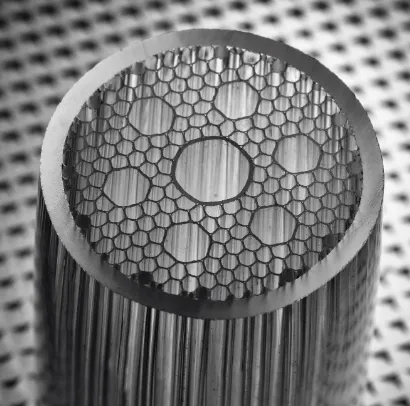
Hollow core fiber: a technological revolution for reconstructing the future of optical communication