How to choose a fiber optic attenuator?
author: Lawson
2025-09-30
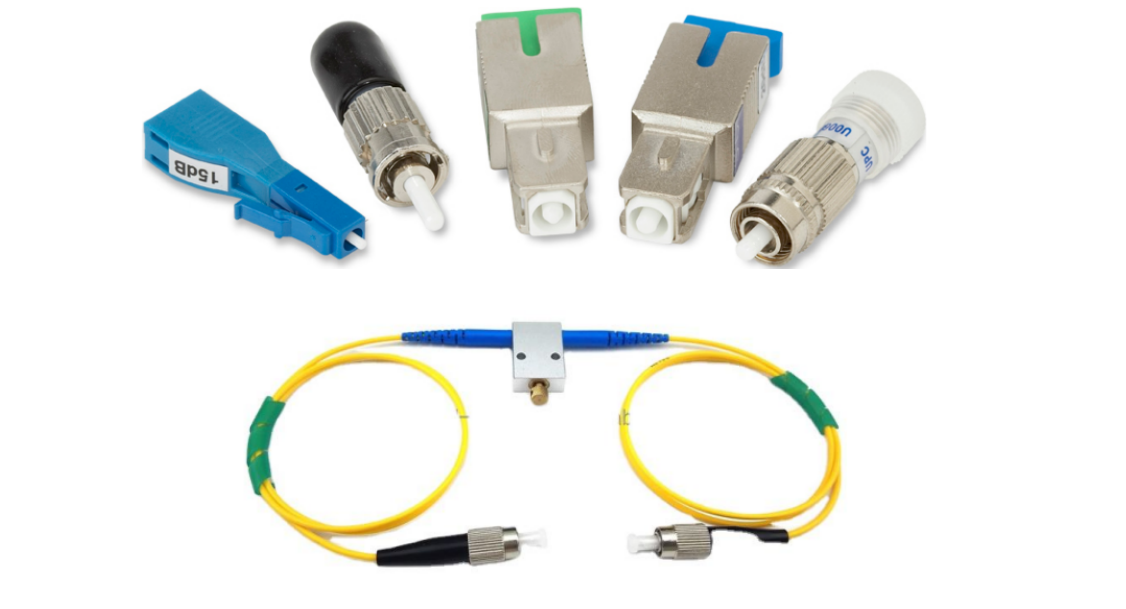
What is a fiber optic attenuator?
An optical attenuator is a passive device used to precisely reduce the intensity of optical signals. Its core function is similar to that of a resistor in a circuit, which controls the attenuation of optical power to prevent excessive optical signals from damaging the receiving end equipment (such as optical modules), ensuring stable operation of the optical communication system within the optimal power range.
An optical attenuator is a passive device used to precisely reduce the intensity of optical signals. Its core function is similar to that of a resistor in a circuit, which controls the attenuation of optical power to prevent excessive optical signals from damaging the receiving end equipment (such as optical modules), ensuring stable operation of the optical communication system within the optimal power range.
Fixed optical attenuator
A fixed optical attenuator is a device with a preset attenuation level that cannot be changed. Fixed attenuators are typically used to permanently reduce the signal optical power to the safe level of the receiver.
A fixed optical attenuator is a device with a preset attenuation level that cannot be changed. Fixed attenuators are typically used to permanently reduce the signal optical power to the safe level of the receiver.
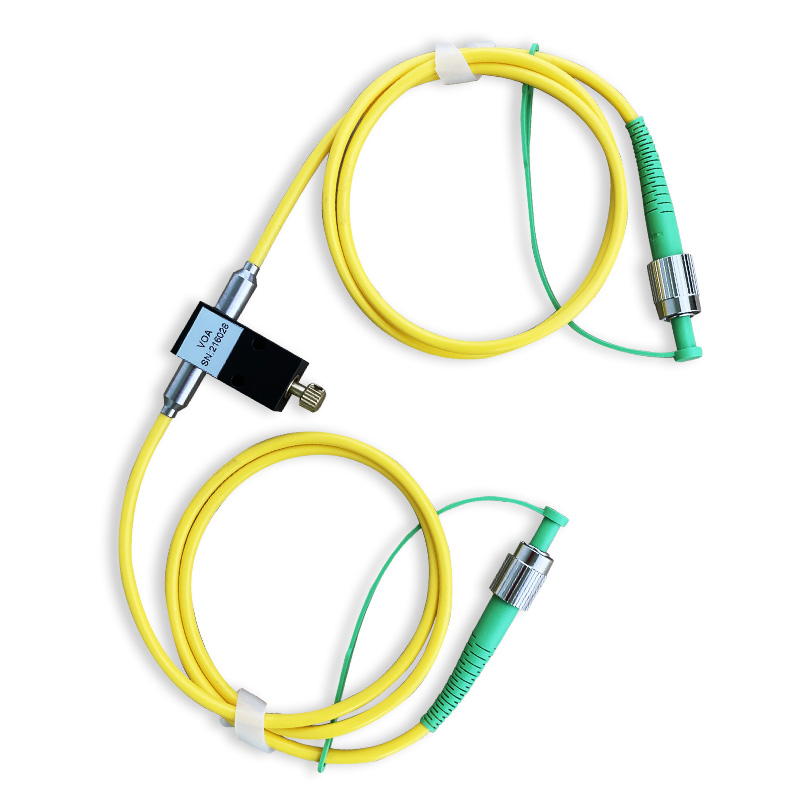
Variable Optical attenuator
Unlike fixed fiber attenuators, variable fiber attenuators allow users to adjust the amount of attenuation introduced into the link. Variable attenuators are commonly used for system testing and troubleshooting to assist in diagnosing and correcting optical power issues.
Unlike fixed fiber attenuators, variable fiber attenuators allow users to adjust the amount of attenuation introduced into the link. Variable attenuators are commonly used for system testing and troubleshooting to assist in diagnosing and correcting optical power issues.
What is the difference between a fixed optical attenuator and a variable optical attenuator?
The main difference between fixed attenuators and variable attenuators is that fixed attenuators have a preset attenuation level that cannot be changed. The variable attenuator allows users to adjust the attenuation amount introduced into the link.
The main difference between fixed attenuators and variable attenuators is that fixed attenuators have a preset attenuation level that cannot be changed. The variable attenuator allows users to adjust the attenuation amount introduced into the link.
Generally speaking, the price of variable attenuators is higher than that of fixed attenuators because their design is more complex and more manageable.
How to choose a fiber optic attenuator? (7 key factors)
1. Interface type matching
Common interfaces: LC (Small High Speed), SC (Square Universal), FC (Metal Thread Seismic), ST (Snap on Multimode).
1. Interface type matching
Common interfaces: LC (Small High Speed), SC (Square Universal), FC (Metal Thread Seismic), ST (Snap on Multimode).
Selection principle: It must be completely consistent with the device port or jumper interface (such as LC to LC).
2. Attenuation value requirement
Fixed attenuator: suitable for stable environments (such as commonly used 5dB, 10dB, 15dB).
Fixed attenuator: suitable for stable environments (such as commonly used 5dB, 10dB, 15dB).
Adjustable attenuator: suitable for testing or dynamic scenarios (such as 0-20dB continuously adjustable).
Calculation formula:
Required attenuation value (dB)=transmit power (dBm) - receive sensitivity (dBm) - link loss (dB)+safety margin (3dB)
Required attenuation value (dB)=transmit power (dBm) - receive sensitivity (dBm) - link loss (dB)+safety margin (3dB)
3. Working wavelength
Single mode system: 1310nm, 1550nm (matching needs to be specified).
Single mode system: 1310nm, 1550nm (matching needs to be specified).
Multimode system: 850nm (with less use of attenuators).
Wide spectrum attenuator: supports dual wavelengths of 1310nm/1550nm.
4. Fiber optic type
Single mode (SM): Core 9/125 μ m, suitable for long-distance transmission.
Single mode (SM): Core 9/125 μ m, suitable for long-distance transmission.
Multi mode (MM): Fiber core 50/125 μ m or 62.5/125 μ m, suitable for short distances.
5. End polishing type
UPC (blue): Return loss>50dB, universal scenario.
UPC (blue): Return loss>50dB, universal scenario.
APC (green): Return loss>60dB, must be used for reflection sensitive systems such as PON/CATV.
⚠️ Prohibition of mixed insertion: Connecting APC and UPC will damage the end face!
⚠️ Prohibition of mixed insertion: Connecting APC and UPC will damage the end face!
6. Power tolerance
Standard type: Tolerant power ≤ 500mW (+27dBm).
Standard type: Tolerant power ≤ 500mW (+27dBm).
High power type: used in scenarios such as fiber amplifiers (>1W).
7. Installation method
Jumper type: directly connect device ports (most commonly used).
Jumper type: directly connect device ports (most commonly used).
Panel type: Installed on the rack distribution frame.
Online (fusion type): permanently fixed installation, optimal stability.
Selection process and suggestions
Measure optical power: Use an optical power meter to measure the current link power.
Measure optical power: Use an optical power meter to measure the current link power.
Calculate attenuation value: Calculate the required attenuation based on the sensitivity of the receiving end (with a 3dB margin reserved).
Match interface and end face: Confirm the device interface type (LC/SC, etc.) and end face requirements (UPC/APC).
Select type:
Fixed attenuator: Low cost, high stability (recommended for routine applications).
Adjustable attenuator: Strong flexibility (suitable for laboratory or debugging).
Precautions
Prohibit excessive attenuation: Excessive attenuation values may cause the signal to be unrecognizable.
Clean the end face: Before use, clean the fiber optic end face with an alcohol swab to avoid contamination.
APC/UPC compatibility: Mixing is absolutely prohibited, otherwise it will permanently damage the device!
Through the above steps, you can accurately select the appropriate fiber optic attenuator according to your actual needs, ensuring the stability and lifespan of the optical communication system.
References: //en.wikipedia.org/wiki/Optical_attenuator
Optical Attenuator: A Key Technology for Optical Signal Control