MTP vs MPO:What Are the Differences?
author: Lawson
2025-08-11
In today's rapidly developing data centers, 5G communication, and high-speed optical modules, the performance of fiber optic connectors directly affects the stability and transmission efficiency of the entire network. MTP and MPO are often compared as the mainstream solutions for high-density fiber optic connections. So, what are the differences between them? How should we choose?
Definition and Background
MPO (Multi fiber Push On) is a multi-core fiber optic connector standard that was first developed by NTT in Japan and later became an internationally recognized high-density fiber optic interface, widely used in data centers and telecommunications networks.
MTP (Multi fiber Termination Push on) is a high-performance version optimized by US Conec based on the MPO standard. It can be seen as an upgraded version of MPO, with significant improvements in plug-in life, wear and tear, and mechanical stability.
Simply put, MTP is an enhanced version of MPO.
What's the difference
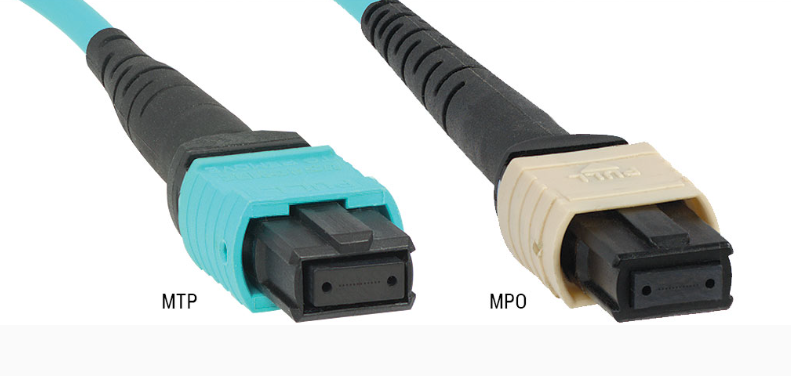
1.Outer Housing
The MTP casing is detachable, making it convenient for on-site rework, polishing, and polarity adjustment.
The MPO casing is non removable and has low maintenance flexibility.
2.Guide Pin
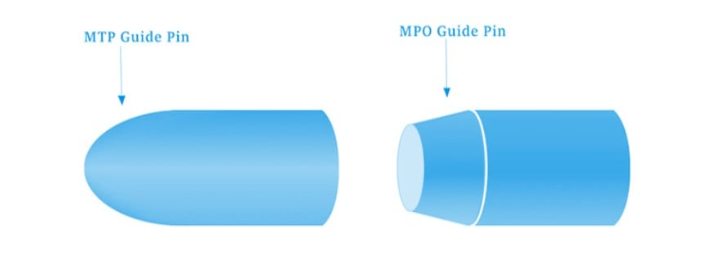
MTP and MPO connectors use different guide pins. MPO uses chamfered guide pins, while MTP uses elliptical guide pins. Compared with MPO, MTP's elliptical guide pin can ensure better guidance effect. The reduction of debris generated at the end face or winding of the pupil allows the MTP fiber optic connector to maintain high-performance transmission for a longer period of time.
MTP and MPO connectors use different guide pins. MPO uses chamfered guide pins, while MTP uses elliptical guide pins. Compared with MPO, MTP's elliptical guide pin can ensure better guidance effect. The reduction of debris generated at the end face or winding of the pupil allows the MTP fiber optic connector to maintain high-performance transmission for a longer period of time.
3.Pin Clamp
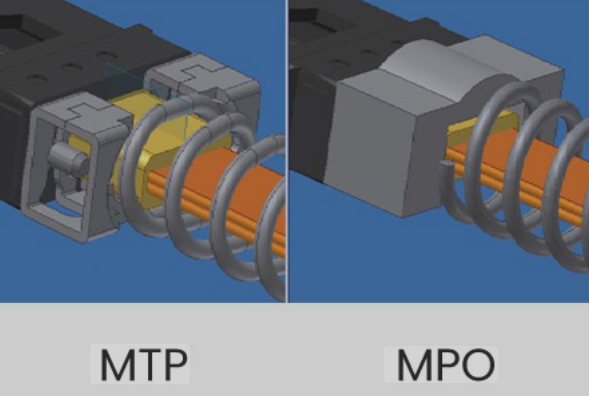
MPO connectors typically use plastic pin clips, which can easily break the pins when cables are frequently plugged in. The MTP connector uses metal pin clips to ensure that the pins are securely fastened and reduce accidental breakage during insertion. The MTP connector uses elliptical springs to increase the distance between the fiber optic ribbon and the spring, thereby preventing damage to the fiber optic ribbon during insertion. The MTP cable design adopts concave needle clamps and elliptical springs to ensure the firmness of the spring seat and increase the gap between the spring and the ribbon cable, thereby reducing the possibility of MTP cable breakage.
MPO connectors typically use plastic pin clips, which can easily break the pins when cables are frequently plugged in. The MTP connector uses metal pin clips to ensure that the pins are securely fastened and reduce accidental breakage during insertion. The MTP connector uses elliptical springs to increase the distance between the fiber optic ribbon and the spring, thereby preventing damage to the fiber optic ribbon during insertion. The MTP cable design adopts concave needle clamps and elliptical springs to ensure the firmness of the spring seat and increase the gap between the spring and the ribbon cable, thereby reducing the possibility of MTP cable breakage.
4.Ferrule
The MT plug of MPO connector is immovable, which is not conducive to providing flexibility under external forces. The MTP connector cleverly designs a floating core structure, which is crucial for improving the mechanical performance of fiber optic connectors. Floating plugs enable the connector to withstand loads without losing physical contact with the mating connector, ensuring stable data transmission and reducing insertion losses. Therefore, MTP connectors designed with floating plug cores have more advantages in such applications, especially suitable for directly inserting active devices (such as Tx/Rx modules), and are favored by engineers. In addition, floating plugs also help reduce the accumulation of dust on the end face.
The MT plug of MPO connector is immovable, which is not conducive to providing flexibility under external forces. The MTP connector cleverly designs a floating core structure, which is crucial for improving the mechanical performance of fiber optic connectors. Floating plugs enable the connector to withstand loads without losing physical contact with the mating connector, ensuring stable data transmission and reducing insertion losses. Therefore, MTP connectors designed with floating plug cores have more advantages in such applications, especially suitable for directly inserting active devices (such as Tx/Rx modules), and are favored by engineers. In addition, floating plugs also help reduce the accumulation of dust on the end face.
Compatibility
The MTP connector complies with the MPO standards outlined in IEC 61754-7 and TI-604-5. Therefore, MTP is fully compatible with MPO and can be used interchangeably, but MTP has better performance.
If you still have any questions about MTP or MPO connectors, please visit our website www.optical-solution.com and contact us through zgsales5@optical-solution.com contact us.
What is a fiber optic loopback?