Classification and application of optical switches
author: MM
2024-12-25
What is Optical Switch?
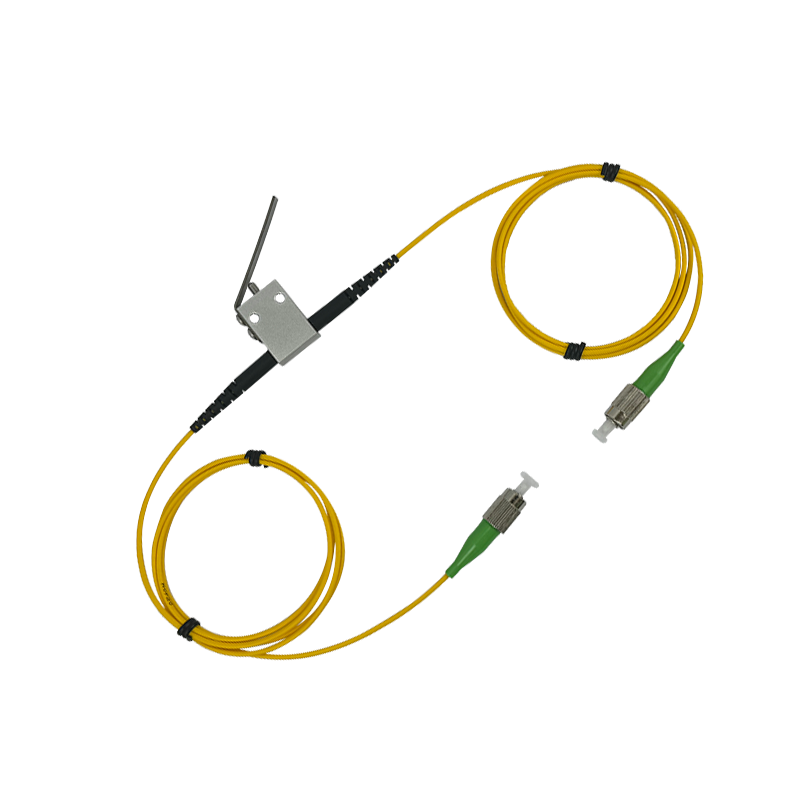
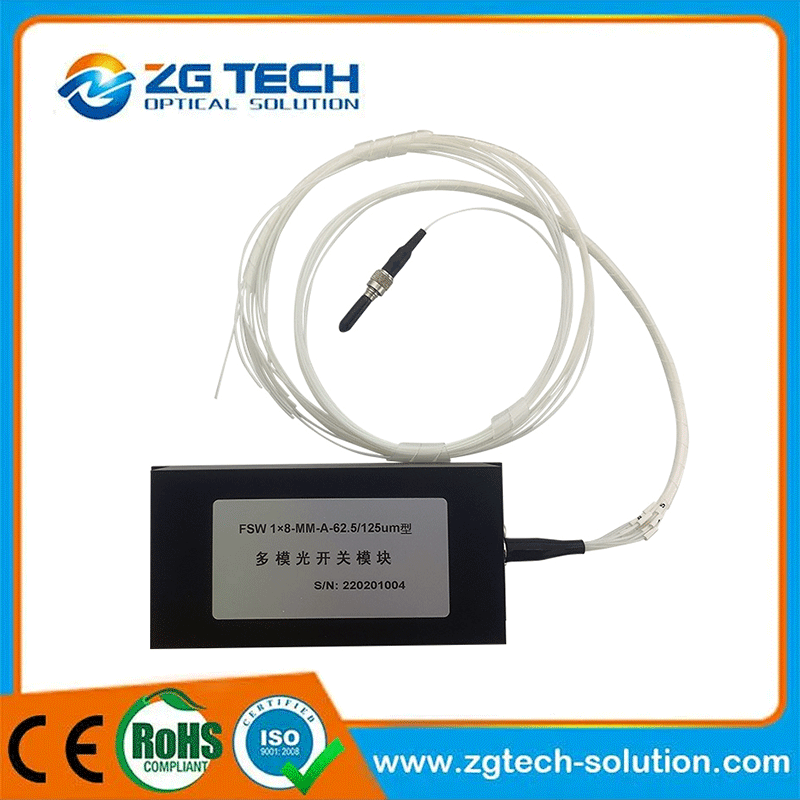
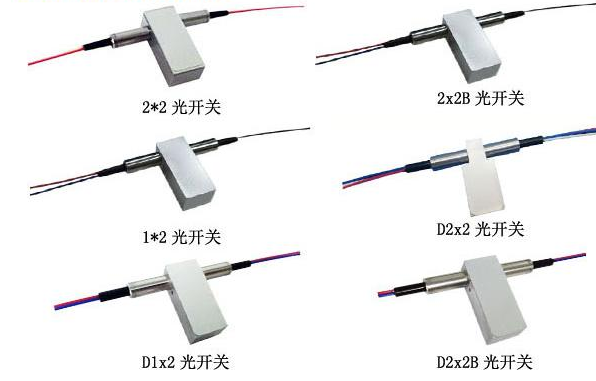
An optical switch is an optical device with one or more optional transmission ports. Its main function is to physically switch or logically operate optical signals in optical transmission lines or integrated optical circuits. The basic form of an optical switch is usually 2×2, that is, there are two optical fibers at the input and output ends, and two connection states can be achieved: parallel connection and cross connection.
1. Classification of optical switches
Traditional optical switch technologies mainly include waveguide and mechanical technologies. Both have their own advantages and disadvantages. The switching speed of waveguide switches can be very fast, reaching the sub-millisecond level, and they are small in size and easy to integrate into a switch matrix. However, the performance of other indicators such as insertion loss, extinction ratio and polarization sensitivity of waveguide switches is relatively poor; although the insertion loss of optomechanical switches is relatively low, the design is simple and the cost is low, the device is large in size and not suitable for large-scale integration. Up to now, the technology of optical switches has made great progress, and many new products have emerged, mainly including micro-electromechanical optical switches, liquid crystal optical switches, inkjet bubble optical switches and holographic grating switches. Let's compare these new types of optical switches.
1. Micro-electromechanical optical switches
Microelectromechanical systems (MEMS) have been applied in many fields. In the optical communication industry, MEMS-based optical switch solutions are also slowly developing. The most basic principle is to mechanically rotate the movable micromirror through static electricity or other control forces to change the propagation direction of the input light, thereby realizing the switching function. The MEMS technology used in micro-electromechanical optical switches makes it independent of various parameters such as the wavelength, format, and protocol of the optical signal, so it is superior to other types of optical switches in terms of loss and scalability. However, due to the complex driving process, its reliability has certain defects, and the cost is also relatively high.
2. Liquid crystal optical switch
Most liquid crystal optical switches realize the switching function by applying an external power plant to control the direction of liquid crystal molecules. The principle of liquid crystal optical switch is: first divide the input light into two polarized lights, and then input the light into the liquid crystal. The liquid crystal changes the polarization state of the two polarized lights according to the change of voltage, and finally the light is injected into the passive device. When voltage is applied, the light is blocked by the liquid crystal; when there is no voltage, the light can pass through, thus realizing the two states of opening and closing of the optical switch.
3. Holographic grating switch
The principle of holographic grating switch is to achieve selective reflection of light by Bragg grating. Bragg grating is generated inside the crystal in a holographic way. When power is turned on, the Bragg grating will reflect the light to the output port. If power is not turned on, the light will pass directly through the crystal. The advantage of this product is that the switching speed can be very fast, and it can form an optical switching system with many ports, but the power consumption of the equipment will be relatively large.
2. Application of optical switches
1. Optical cross-connection is mainly composed of optical switch matrix, which can realize dynamic management of optical path and fault repair of optical network.
2. Optical switch can realize automatic protection reversal of network.
3. Using 1:N optical switch can realize network monitoring.
4. Optical switch can be used for optical fiber communication device detection.
Does your optical network often experience lag? It may be that the optical switch is "false switching"!
Optical fiber on-off switch,8 Ways to choose and use?
Related Article

Does your optical network often experience lag? It may be that the optical switch is "false switching"!