Basic knowledge and skills of data center cabling
Core knowledge of data center cabling
Standard system cognition
The data center cabling follows the internationally recognized standard system, where TIA-942 divides the data center into four reliability levels (1-4), with higher levels representing stronger system reliability. Domestic projects also need to follow the GB 50174 national standard, which divides data centers into three levels: A, B, and C. Level A is fault-tolerant, level B is redundant, and level C is basic.
Topology structure selection
The ToR (top of rack access) architecture deploys access switches at the top of each server rack, with the advantages of short cable length, convenient management, and clean interior of the rack, making it suitable for high-density server environments. EoR/MoR (column head/column middle access) adopts a centralized distribution scheme, with the entire cabinet sharing the distribution cabinet. The advantage is that it has fewer switches and lower overall cost, but with more cables, it is more suitable for small data centers or scenarios with low cabinet density.
Selection of transmission medium
In terms of copper cables, Cat6A supports 10Gbps speed transmission for 100 meters, becoming the mainstream choice for server access. In the selection of optical cables, multimode OM4 fiber supports 100G transmission up to 150 meters, which is currently the mainstream choice for internal interconnection in data centers; Single mode OS2 fiber focuses on long-distance transmission and is mainly used for interconnection scenarios between data centers.
Connector configuration scheme
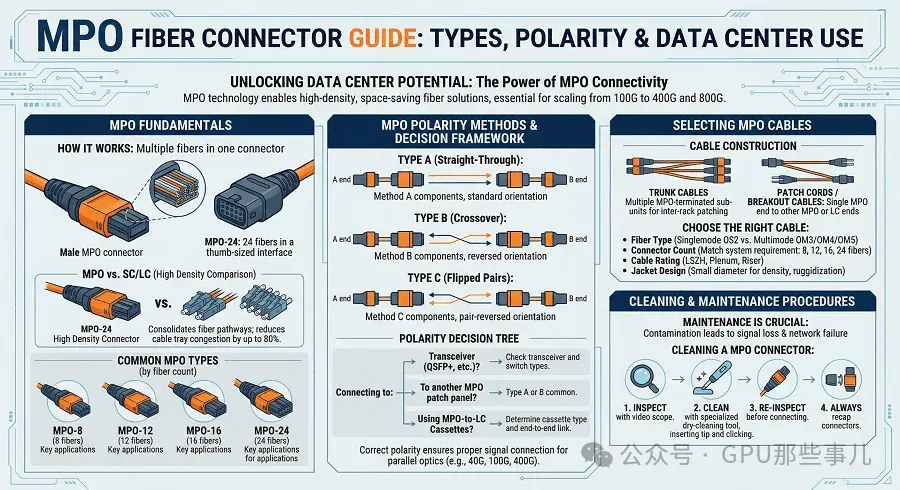
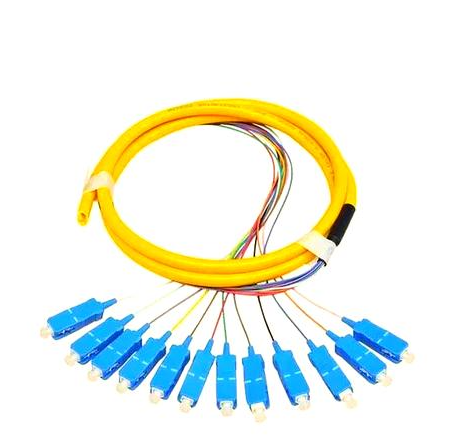
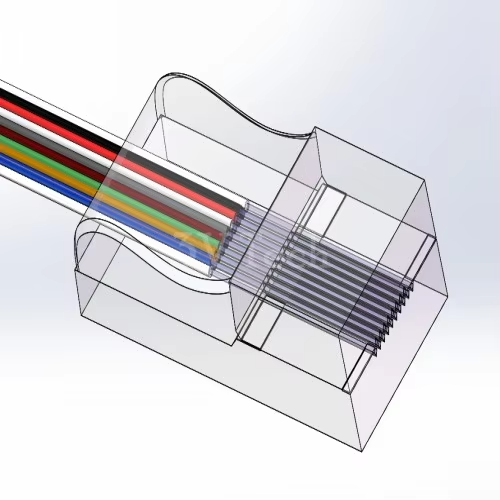
LC connectors have become the mainstream choice for optical cable connections due to their small size and high density. MPO/MTP multi-core connectors are specifically designed to serve the needs of 40G/100G high-speed parallel optical transmission and are essential components for high-speed interconnect scenarios.
Practical skills for wiring implementation
Key points of planning and design
Each cabinet should reserve 20% -30% redundant capacity, including cable channels, power supplies, and patch panel ports. During the planning phase, it is necessary to consider the design of dual uplink links to ensure the reliability of network connections, while also anticipating the business development needs for the next 3-5 years.
Color Management Scheme
Establish a unified color coding system: blue indicates the internal network of the data center, yellow is dedicated to the storage network, green represents the management network, and red is used for emergency or critical business networks. This visual management can greatly improve operational efficiency.
Line management process specification
Horizontal cable managers and vertical cable trays must be equipped inside the cabinet to ensure that the bending radius of cables is not less than 4 times the wire diameter. Use specialized cable ties to secure cables and avoid cable compression and deformation caused by excessive tension, which can affect transmission performance.
Label identification system
Adopting a unified naming convention, label information should include key information such as physical location, cabinet number, equipment port, etc. Recommend using industrial grade machine printed labels to ensure clarity and durability of identification.
Testing and acceptance requirements
After the construction is completed, a professional certified tester must be used for full line testing to ensure that all links pass the channel testing standards. The complete test report should be archived and saved as the basis for future maintenance and troubleshooting.
Common implementation misconceptions
To avoid excessive compression of initial construction costs, a high-quality cabling system is the cornerstone of long-term stable operation. Do not overlook the importance of the labeling system, as clear labeling can significantly improve operational efficiency. Different system cables should be physically isolated, and network, storage, and management networks should be wired independently. The wiring process must be standardized, and neat wiring is not only aesthetically pleasing, but also beneficial for equipment heat dissipation and troubleshooting.
Core recommendation: Data center cabling should strictly follow the principles of "structured, standardized, and modular", and build a stable, reliable, and easy to maintain physical infrastructure through scientific planning, standardized construction, and improved documentation.
Technical White Paper: Outlook for 2026, Top 10 Technological Evolution Trends in the Optical Communication Industry
20 Questions on Basic Knowledge of Fiber Optic Cables